Posted in Technology
Often times, small business owners think that a regular Wi-Fi setup, similar with what they’ve gotten at home, is more than enough for their business’ needs. That’s why it’s called “small” business after all, isn’t it?
Nothing could be further from the truth, though. As a business owner, you are at a much greater risk in comparison with a home user, and if your business-related data is compromised, you could even lose your business, in case that your customers’ data falls into wrong hands. Let us explore the key things that any business owner needs in order to have access to secure, fast Internet access.
1) A strong Internet connection. This is quite obvious, right? Still, many business owners prefer to save a few dollars a month and end up having a poor internet connection, which lets them down just when they were supposed to send that important report!
Don’t make the same mistake; invest in a high quality internet connection that won’t let you down. If you also have a smartphone, switch to a plan that includes some mobile data as well, and then tether the mobile Internet connection whenever your broadband is down. Hopefully, this won’t happen too often.
2) A good router. It’s amazing how many of the modern routers have such great features, while costing about 200 dollars! In fact, you could pick up a decent router for less than 100 bucks! Here’s a list with some of the best routers of the moment; many of them will work fine for small businesses as well: http://www.cnet.com/topics/networking/best-networking-devices/
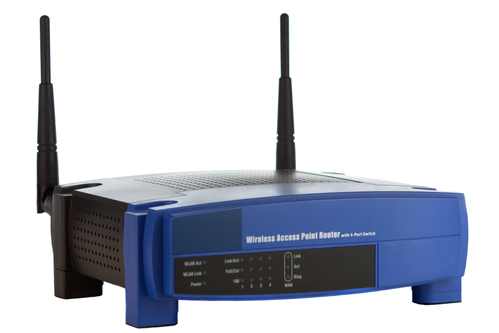
Here are the needed router features for a small business:
– IPv6 support. Few home owners need this features, but it is crucial for businesses – even for small business owners! IPv6 allows better packet processing and routing, thus increasing the data network transfer speeds.
– DMZ port. A router that includes the DMZ port feature is able to create a subnetwork, keeping the business owners’ computers insulated from the main network, and thus stopping at least some of the hackers’ attacks.
– Virtual networks. A good router will be able to create different networks for each business department, restricting the network traffic accordingly.
– Content filtering is a great addition for any business owner who is worried that his/her employees may be spending time on Facebook, rather than doing work. With content filtering, you can easily restrict access to certain websites.
– Virtual private networks. A VPN allows the employees to have access to the company data and tools from anywhere in the world, without compromising its security.
3) A decent SMA antenna. Without it, even the best routers are useless. Make sure to use repeaters as well, in case that they are needed. You don’t want to lose the advantage of having a great Internet connection because the wireless signal can’t pass through the walls in your office.
It is true that small business owners have to be very careful with their money, but having a strong Wi-Fi signal and a secure network is mandatory for them. Invest in a good internet connection, a good router and a good antenna and you will have a good wireless network that will work fine for many years.
read more
Posted in Medical, News
1. A series of gastric banding seminars are going to be organized on the 1st and 3rd day of the month by at Bingham Memorial Hospital. The seminars will be held during evenings, from six till seven p.m. in an attempt to help people have a better understanding of the obesity related issues.
During the past years, obesity was considered a sign of weakness, and people were blamed for having this condition. People were asked to keep a strict diet and do physical exercises. And back in the past, the weight loss surgery was not considered a good option.
Today obesity is considered to be a disease and, at the same time, a factor that determines many other secondary medical conditions. Weight loss surgeries are nowadays considered valuable methods of treating the obese persons.
Louis Kraml, CEO of Bingham Memorial Hospital, is interested in changing people’s mentality, considering the fact that obese people can be safely treated using minimal invasive surgical operations that in the end, help people eat less quantities of food.
This new type of surgery is called laparoscopic adjustable gastric banding. The seminars are free, but people need to register in order to participate. The Bariatric Team will be attending the seminars as well, in order to answer all possible questions.
2. Bingham Memorial Hospital has announced the results of an independent study which tried to determine the economic impact of the hospital in the geographical are around it.
The study was conducted by representatives from Boot Strap Solutions and the University of Nevada and the results have proved that the economic impact on the region was close to 600 million dollars during the last 12 years. Louis Kraml, the CEO of the hospital, has stated that he is very proud of the results acquired and of the fact that residents in the area of east Idaho were the first who benefitted from the positive economic impact that the hospital has been having in the region.
According to the study, the hospital provided over 1700 jobs, close to 65 million dollars in labor income, having a total economic impact of about 90 million dollars. Bingham Memorial Hospital is the fifth largest employer in Bingham County; it has hired more than 600 doctors in 2011. And the good news doesn’t end here: all the revenue generated by the hospital is invested in the hospital, allowing the local community to benefit for high quality medical services.
3. Bingham Memorial Hospital was awarded the Medicare Rural Hospital Flexibility Grant, and the funds will be used in order to create a national model for improving patient outcomes.
The hospital was the only one in the region that has received this prize, and this is a strong indicator of the high quality of medical services that patients can benefit from. Louis Kraml, CEO of BMH, has declared that this way the hospital can thus build an easy to follow model that has the potential to help all the rural hospitals.
read more
Posted in Medical, News, Technology
1. A new watch is capable of measuring people’s blood oxygen levels as well as the heart rate, and instantly sends the data to doctors. Oxitone is the name of the Israel-based business company that has created this device, which can save the lives of many sick people.
 Pulse oximeters are extremely useful in determining if the oxygen comes in the right amount and if the heart beat has regular values. These values are measured in hospitals and emergency situations with the help of several medical devices, wires and stands. But now this can be done a lot easier with the help of this watch.
The device can be worn during all sorts of activities, and is capable of informing and alerting the owner when something unusual is happening. This way the person that has such a medical problem can immediately see a doctor and get the necessary help.
2. In Taiwan, the scientists have created a prototype for teeth embedded sensors that understand oral activity like eating, drinking, smoking and brushing the teeth. The data is then sent to the dentist in order to inform him on the owner habits.
The device was created by a group of scientists from Taiwan University and it consists of a small chip with an accelerometer and a Bluetooth connection. The sensor detects the movements and recognizes the type of activity that is going on. The accuracy of the device is around 94%.
3. A new device, the size of a pen, cleans the blood of potentially deadly viruses. The device was created in an effort to help people clean their blood outside the hospital. The Hemopurfier was developed by Aethlon Medical and it does pretty much the same as the medical device used by people with kidney failure, which regularly need to eliminate excess water and waste in the blood. The Hemopurifier is different from dialyze devices as it pumps antibodies in the blood. These antibodies can then attach to the viruses present in the blood, thus cleaning the blood of the patient. The device will prove to be helpful for the existing patients, but also in cases when the treatment is needed in the event of a bio terrorist attack.
4. Who does not want to get rid of stress? PIP is a new device that was created so that it detects stress when held in the hand and, at the very same time, helps the owner understand what to do in order to get rid of it. The device can measure moisture and heat that, when present at high levels, indicate stress and discomfort. This small machine can then send the collected data to a smartphone.
5. With the help of Match, autistic persons can be taught to cook. This is a color coded system that can guide the autistic person through preparing food. The system was created at Syracuse University and is made out of cooking tools which are colored in a certain way, so that the entire cooking process is more organized.
It is well known that kitchen is a place that can confuse the autistic persons a lot, but with the help of the colorful tools, things can become a lot easier for them. The kit is made of four colors and shape coded pots, so that the autistic person can help to separate different ingredients and also measure them in order to prepare the desired food recipe.
read more
Posted in News
1. Hello Compost has launched a wise project meant to encourage people composing: low income families bring organic waste and receive credits in exchange. A similar project has been successfully developed in Mexico City and is in progress in New York City. With the received credits, the low income families can buy fresh products.
 People in many parts of the globe have been taught to separate the recyclable matters, and it seemed that composting the organic rubbish would be useful for all of us. Hello Compost came with a brilliant idea that proved to be useful: to offer rewards to those that get involved in the program. The families that want to get involved receive odor blocking bags to put in their kitchen; they can used to store the organic waste. When a bag gets filled, it is collected and weighed by a nonprofit organization, which calculates the credits the families will receive as an incentive.
2. The Magical Book Reader is a new device that can make going to bed a lot more pleasant, especially for younger kids. It is a device which gets attached to the kid’s book and it can play recordings made by the kid’s loved ones. There is also a camera that points at the page read by the kid, so that the recording that is played will properly fit the story. In other words, the device easily recognizes the page the kid is reading. The device is of great help for parents that are away from home, which can this way interact with their kids.
3. A throw able 360 degree camera may prove to be of great help in rescue operations. When thrown in the air, the camera can get useful pictures that the eyes cannot catch and can be very helpful to its owners. The camera is similar in size with a tennis ball and has four cameras which take pictures that can build a panoramic view of the entire area.
The images are then sent to a monitor using a wireless connection. The device is considered to be of great help especially in emergency situations, in military reconnaissance, mapping or even movie making.
4. What does the majority of people do with half eaten or half used fruits or vegetables? In many cases those are thrown away… but this is no longer the only solution. The rubber caps have proved to be useful in keeping the food fresh for long periods of time. The rubber caps are created so that home cooks preserve the fruits and vegetables that did not end up in the food they have been cooking. With their help, the fruit or vegetable flesh is covered and spoiling does not occur so rapidly. The rubber covers are created in many colors and shapes, so that they fit almost all fruits and vegetables.
5. All the kids are afraid of going to the hospital, the same way many adults do. Alberta Children’s Hospital has bought a talking robot that can distract kids during the uncomfortable medical procedures. MEDI is the name of the robot that can really make life of the kids in hospital a lot easier.
6. Have you ever been chasing a vacant parking spot? South Koreans have come up with the idea of alerting the drivers when free parking lots are available. The method is a real interesting and less expensive one: a balloon system is used in order to signal drivers. When a car occupies the parking lot, the string of the balloon is pulled under the vehicle and when the car leaves the parking lot, the balloon is once again up in the air, easy to be seen by other drivers looking for a free spot.
read more

